Independent developer · South Africa

Software that holds up in the real world.

I build mobile apps, websites and the systems behind them — for places where the signal is weak, the nearest help is far, and the thing simply has to work.

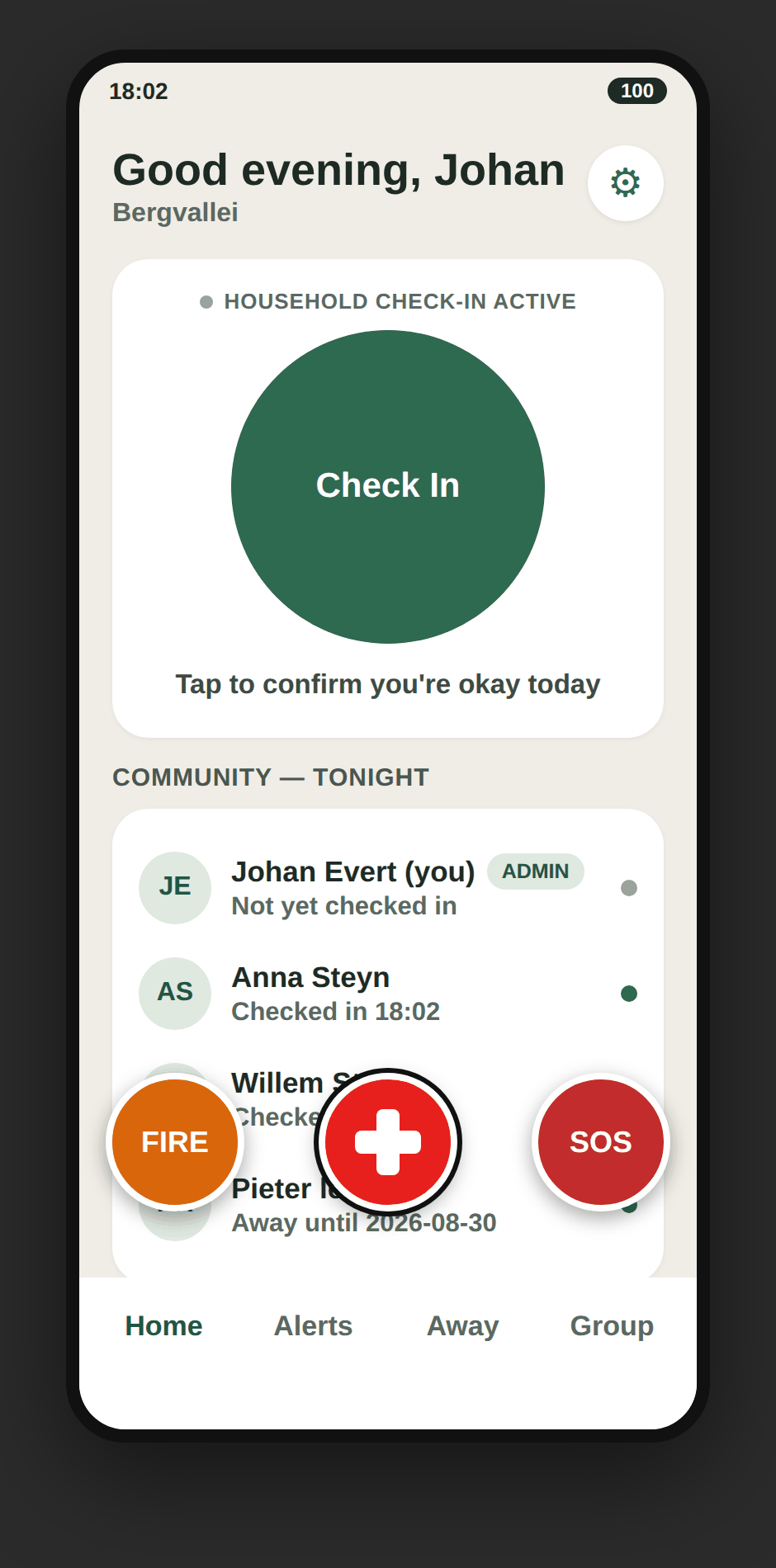
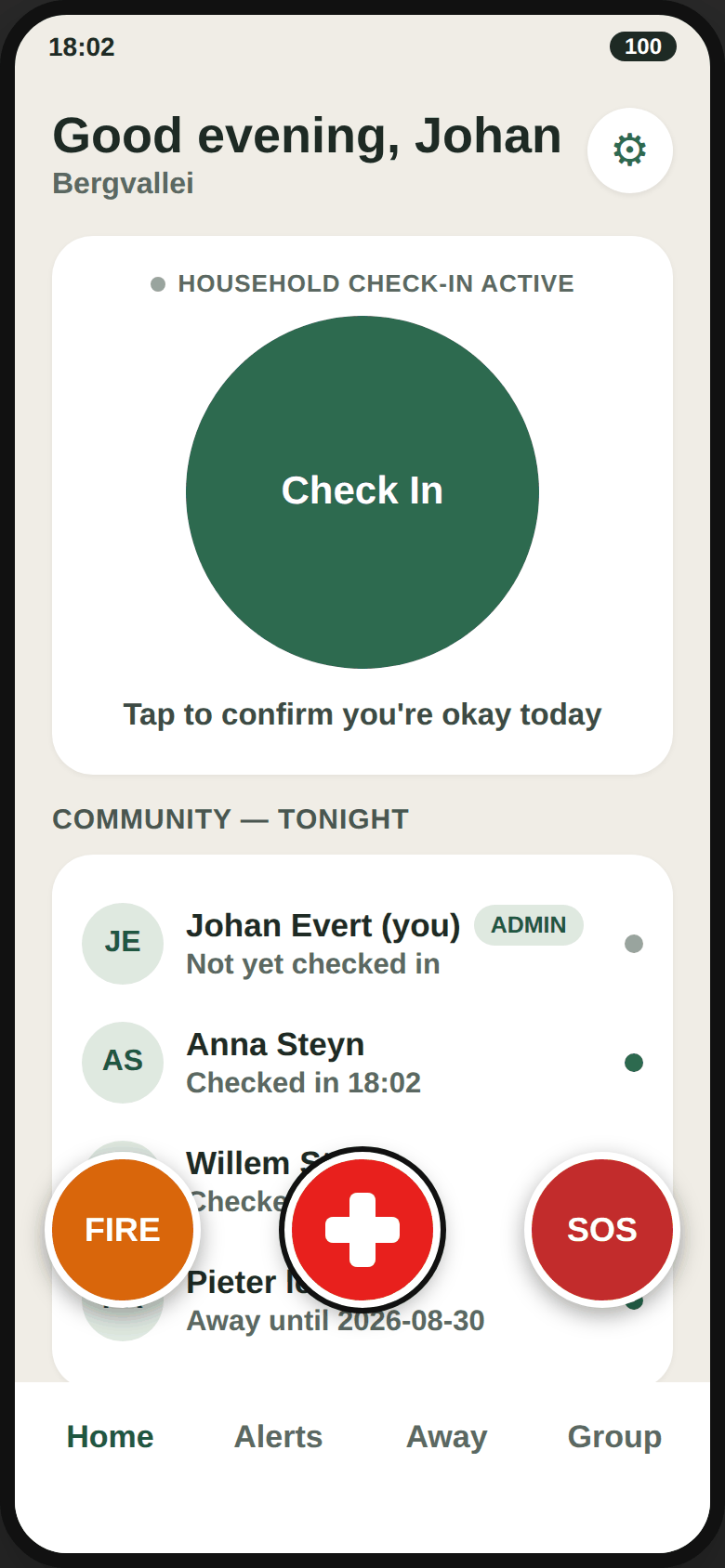
The Farm Safety app open on a phone, showing the evening check-in button and the community roster.

Farm Safety, in daily use. Screens use a fictional community.

2 builds live and in use — an Android app and a commerce site
13 people depending on one of them every evening
0 frameworks, plugins or CMSs left for you to keep patched
Same day fixes reach everyone, without a reinstall

Selected work

Two builds, both still running.

I'd rather show you two things that are actually in use than a gallery of work nobody ever opened.

Live · Android

Farm Safety

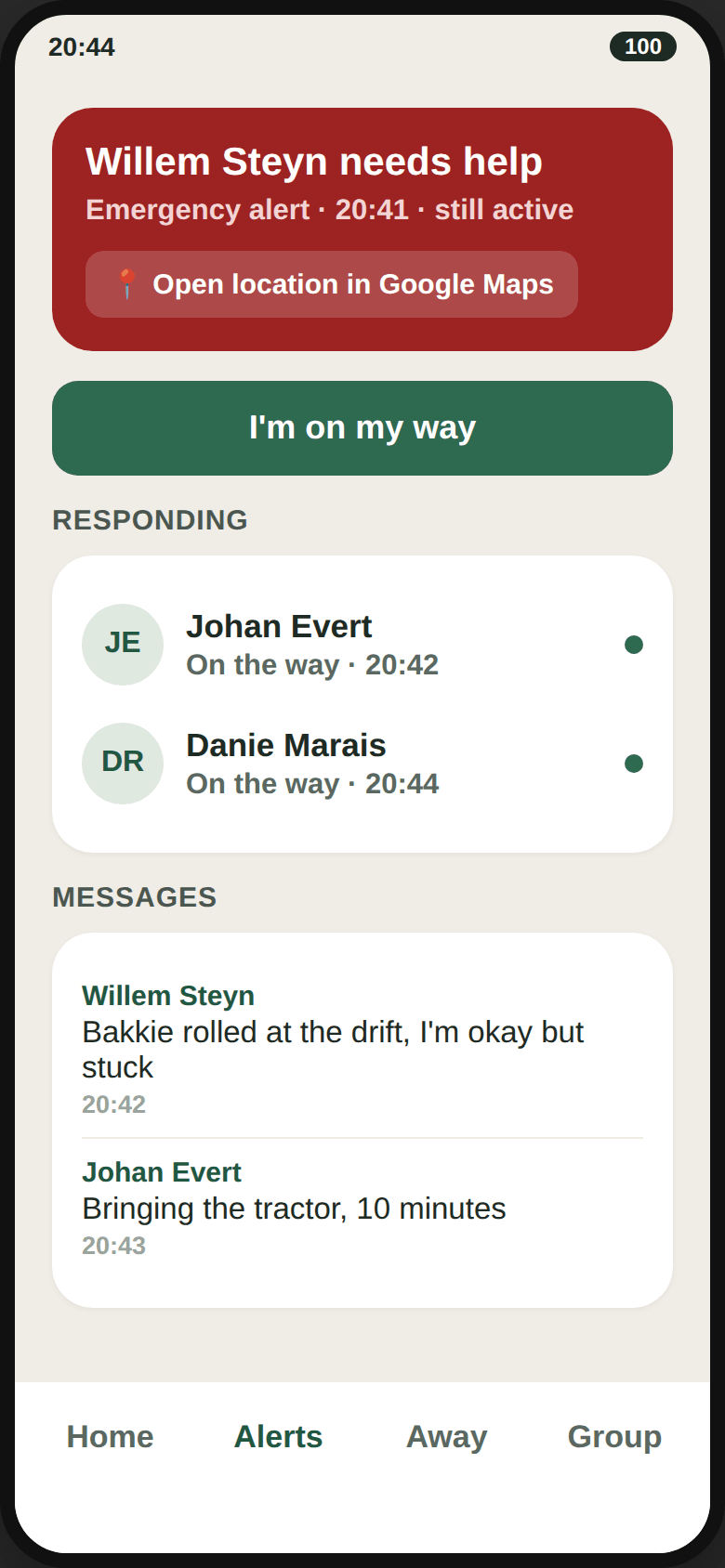
A community emergency and check-in app for farming families who live far from help. Every evening, every member confirms they're okay with one tap — and if someone doesn't, the whole valley knows within seconds.

  • React Native
  • TypeScript
  • Node · Express
  • SQLite
  • Push notifications
  • GPS
  • Used every evening since launch
  • 13 members
  • Updates land same-day
Read the case study
The app's home screen with the evening check-in button. A live emergency alert with a map pin and neighbours responding.

Live · Website

Johan Evert Wildlife

A portfolio site built to sell rather than just to show: a filterable gallery, an enquiry form that qualifies before it quotes, orders routed by country, and hotlink protection written by hand. Designed, built and photographed by me — which is the short answer to what I can do for someone else's site.

  • Hand-coded
  • PHP forms
  • Commerce routing
  • SEO · sitemap
  • cPanel hosting
  • Takes orders and routes them by country
  • 64 images
  • One HTML file
The Johan Evert Wildlife homepage: a leopard resting along a branch in golden light, with the photographer's name over it and a View Gallery button.

What I do

Three kinds of work, one way of working.

Small enough to answer the phone myself, disciplined enough that you never have to.

Mobile apps

An Android app your people can install directly — no app-store account, no approval queue — that you can fix the same afternoon and have the update on every phone by evening. Built to behave sensibly when the signal drops, because out here it will.

Farm Safety · live

Websites

A site that loads on a bad rural connection, costs almost nothing to host, and has no CMS or plugins for you to keep patched. If it needs to take orders or qualify enquiries, it will — that's the harder half and it's the half I actually enjoy.

What moves the price: how many pages, whether it needs a form or a shop, and whether the words and pictures exist yet. I can shoot the photographs too, so they don't have to come from a stock library.

Sample: johanevert.co.za

The bits behind it

The machinery nobody sees and everybody depends on: APIs, databases, push notifications, scheduled jobs, hosting and the deploy process. If you already have something half-built and nobody left to finish it, this is the part I'd be picking up.

Node · SQLite · cPanel

How I work

The habits behind software people trust with their safety.

Farm Safety is not a demo. If it fails quietly on a Tuesday night, someone doesn't get help. That standard sets how I build everything else.

  • Every deploy is verified. Files are checked by SHA-256 read-back after upload — I don't assume a deploy landed, I confirm it.
  • Tested where it matters. The state machines that carry real consequences — check-ins, vouching, away scheduling — are covered by tests, not hope.
  • The app never cries wolf. Alarm-volume notifications are reserved for real emergencies. Everything else uses ordinary channels, so people keep trusting the loud one.
  • Ship small, ship often. Fixes reach every phone over the air, usually the same day, without anyone reinstalling anything.
  • Built by someone who uses it. I'm on the roster too. Every rough edge is one I run into myself.

How it starts

Three steps, and none of them cost you anything.

The main reason people don't send the email is not knowing what they're committing to. So: nothing is committed until step three.

  1. Tell me what it needs to do

    Not what it should look like — what job it has to do, and who for. A few sentences is plenty. If you have an existing site or system, say what's wrong with it.

  2. I tell you honestly what's involved

    What it would take, roughly what it would cost, and whether I'm actually the right person for it. If an off-the-shelf product does the job for less than I'd charge you, I'll say so.

  3. We agree the scope, then I build

    A fixed scope and a price before any work starts, so there are no surprises in either direction. You deal with me the whole way through — there's nobody else to deal with.

Get in touch

Tell me what you're dealing with.

A website, an app, or a system that has to keep running without anyone watching it. I read every message myself and usually reply within a day.

Rather use your own mail? info@johanevert.co.za. No newsletter, no list — your address is only ever used to reply.